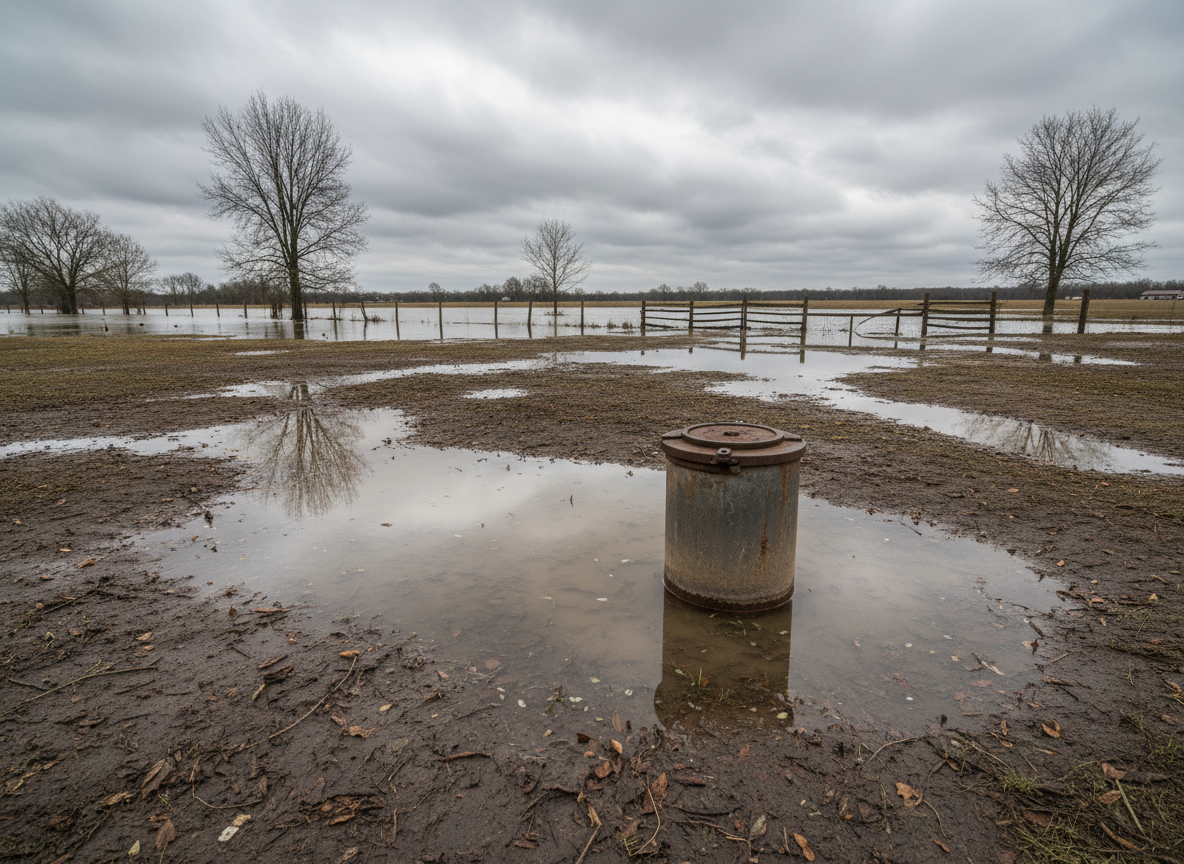
Quick answer: Do not drink or cook with well water after a flood until a lab test shows it is safe. Use bottled water, or boil well water at a rolling boil for 1 minute if it has no fuel or chemical smell. Keep the pump off until a qualified electrician or well contractor checks the wiring, then flush the well until the water runs clear, shock chlorinate it, flush again and test for coliform bacteria.
Floodwater can carry sewage, animal waste, farm runoff, fuel and chemicals. If it reached your wellhead or seeped down around the casing, it can contaminate the water you drink. The EPA’s flood fact sheet is blunt: people drinking or washing with water from a flooded well risk getting sick.
Safety first: electricity and gas
A flooded well is an electrical hazard before it is a water quality problem.
- Turn off the pump’s circuit breaker before going near the well. The New York State Department of Health also advises wearing rubber-soled, preferably waterproof boots.
- Do not touch exposed wiring, and do not run the pump while any electrical parts are underwater.
- Do not turn the pump back on until a qualified electrician or well contractor has checked the wiring, control box and pump. The EPA warns of shock hazards and pump damage if flooded equipment is powered up.
- Do not climb into a well pit. The CDC warns that hazardous gases can build up in pits.
- Do not attempt repairs yourself unless you are experienced with this work, per the CDC.
Signs your well was flooded
Assume the well is contaminated if floodwater covered or reached the wellhead. Other signs, drawn from New York State and EPA guidance:
- Mud, debris or water stains on the well casing or cap
- A loose, missing or damaged well cap
- A bent, cracked or tilted casing
- Soil washed away (eroded) around the base of the well
- Muddy, cloudy or discolored water at the tap, or sand and sediment
- A new smell, especially fuel or chemicals
The EPA notes that wells older than 10 years or shallower than 50 feet are especially likely to be contaminated, even if they look undamaged. Wellheads in pits or below ground level are also more vulnerable than a casing that sticks up well above grade.
If the water smells like fuel or chemicals, stop. The CDC says disinfection will not make that water safe. Use bottled water and call your local health department.
What to drink in the meantime
| Situation | What to do |
|---|---|
| No fuel or chemical smell | Use bottled water, or boil well water at a rolling boil for 1 minute before drinking, cooking, brushing teeth or making formula (CDC) |
| Fuel or chemical smell, or nearby chemical spill | Bottled water only; boiling and chlorine do not remove chemicals |
| Pump off or power out | Bottled water, or ask the local health department about approved water sources |
The CDC advises that bottled water is safest until you are certain the water is free of contaminants.
Step by step: restoring a flooded well
These steps follow guidance from the CDC, EPA and New York State Department of Health. Your state health department may have its own version; follow it where it differs.
1. Have the well and pump inspected
Once floodwaters recede, have a licensed well contractor check the cap, casing, seal and pump, and an electrician check the wiring. Damage to the casing or cap needs to be fixed before disinfection, or contamination will keep getting in.
2. Pump the well until the water runs clear
After the equipment is cleared to run, flush the well through an outside faucet with a hose, so dirty water does not go through your household plumbing, water heater or treatment equipment. Direct the water away from the house and away from the septic system’s drain field.
New York State notes this can take thirty minutes, or it could take several hours or days, depending on the well and how much floodwater got in. Keep going until the water is clear and free of sediment.
3. Shock chlorinate the well
Disinfect with plain, unscented household bleach, circulate it through the well and every faucet, and let it sit. Our step-by-step guide to shocking a well has the dose chart based on your well’s depth and diameter.
For flood recovery, use a longer contact time than a routine shock. The CDC’s emergency guidance says to leave the chlorine in the well and plumbing for at least 12 hours, and New York State recommends at least 8 hours, preferably 12 to 24. Bypass softeners, filters and reverse osmosis units during the shock unless the manufacturer says they can handle chlorine.
4. Flush out the chlorine
Run an outdoor hose until you no longer smell chlorine, keeping the water away from gardens, streams, ponds and your septic system. Then run the indoor taps briefly to clear the pipes. If the odor lingers, New York State notes you may need to flush more or wait several days before testing.
5. Test for bacteria
Collect a sample for total coliform and E. coli (or fecal coliform) and send it to a state-certified lab. Timing advice varies by agency:
- The CDC and EPA flood guidance say to test 7 to 10 days after disinfection.
- New York State says to test only after the chlorine odor is completely gone.
The safest approach is to wait until there is no chlorine smell and follow your local health department or lab’s timing. Keep using bottled or boiled water until you get a clean result. If the test is positive, repeat the shock once; if bacteria come back again, have a well contractor look for a damaged casing, seal or cap. See coliform bacteria in well water for what results mean.
Consider adding nitrate to the test if the floodwater came from farm fields or near septic systems. Our well water testing guide covers other tests worth adding.
When to retest
One clean test does not mean the problem is over. The EPA notes a well may be unsafe for many months after a flood because a damaged septic system or chemicals in the soil can keep seeping into groundwater. The CDC recommends this follow-up schedule after an emergency:
| When | What to test |
|---|---|
| 7 to 10 days after disinfection | Total coliform and E. coli |
| 2 to 4 weeks later | Total coliform and E. coli |
| 3 to 4 months later | Total coliform and E. coli |
| Ongoing | At least twice a year |
Retest right away if the water changes in taste, smell or clarity.
Septic system concerns
Your well and septic system often share a small lot, and floods affect both.
- Do not pump the septic tank while the ground is saturated. The EPA warns the tank could try to float out of the ground and damage its inlet and outlet pipes.
- Use as little water as possible until the ground dries out. Heavy use can push sewage back into the house.
- Keep chlorinated and flushed well water out of the septic system. Send it to a drainage area with an outdoor hose.
- Have the septic system inspected if it shows settling or will not accept water. The EPA notes flooded tanks can fill with silt and debris, and badly clogged drain fields may need to be replaced.
A failing septic system near the well is one reason contamination can return after a clean first test, which is why the follow-up testing matters.
Frequently asked questions
Is it safe to shower with well water after a flood?
Not until the well has been flushed, disinfected and tested. The EPA warns that washing with water from a flooded well can make people sick.
Does boiling make flooded well water safe?
Boiling at a rolling boil for 1 minute kills germs, according to the CDC. It does not remove fuel, chemicals or nitrate, so do not rely on boiling if the water smells like fuel or chemicals.
How long after a flood can I drink my well water?
Only after a certified lab test shows no coliform bacteria. With flushing, a 12-hour or longer disinfection and a 7 to 10 day wait before sampling, plus lab turnaround, expect it to take at least a couple of weeks.
My well didn’t go underwater. Do I still need to test?
If floodwater came near the well, yes. The CDC recommends testing when there is flooding near your well, and shallow or older wells can be contaminated through the soil without being covered.
Can I disinfect the well myself?
Many homeowners do, using state or university guidance. Have the pump and wiring checked first, and call a licensed contractor if the casing or cap is damaged or you are not comfortable working around the wellhead.
Related guides
- How to shock a well with bleach (with dose chart)
- Coliform bacteria in well water: what a positive test means
- Well water testing: what to test for and how often
Sources
- CDC – How to Disinfect Wells After an Emergency
- U.S. EPA – What to Do After the Flood (private wells fact sheet)
- New York State Department of Health – Restoring and Testing Your Private Well After a Flood
- U.S. EPA – Septic Systems: What to Do After the Flood
This guide is for general information. After a flood, follow your state or local health department’s instructions, and have electrical equipment checked by a qualified professional before restoring power.
Leave a Reply