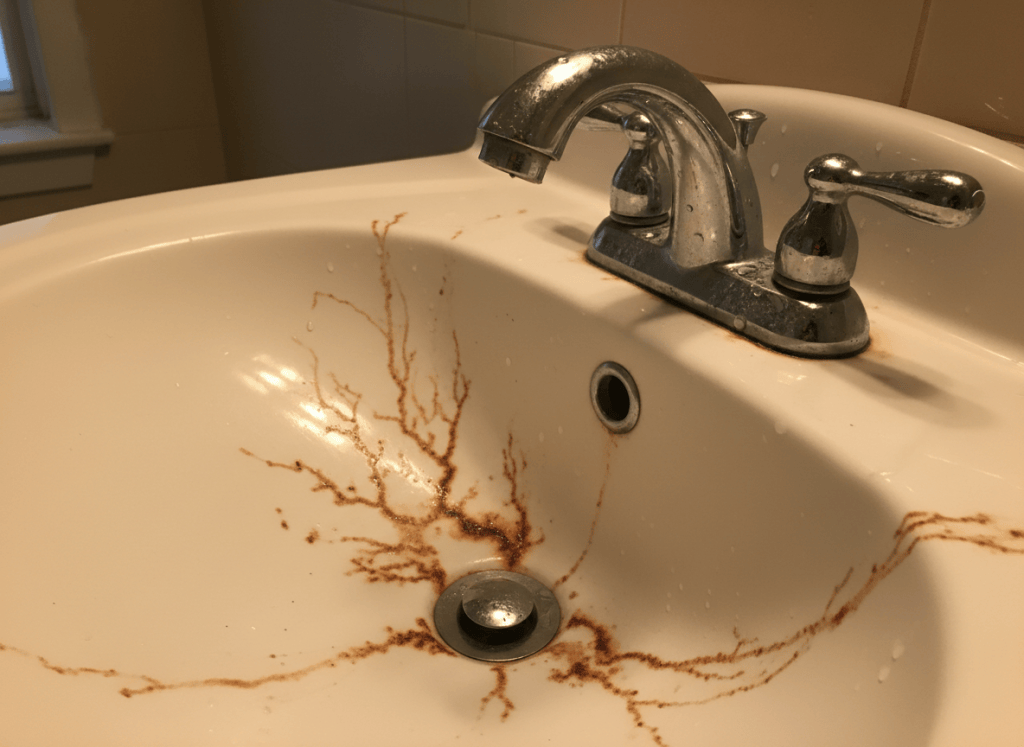
Quick answer: Orange, red or brown stains in sinks, toilets and laundry almost always mean iron in your well water. Black stains usually mean manganese. Neither is a health hazard at typical levels, but both cause stains and a metallic taste above the recommended limits of 0.3 mg/L for iron and 0.05 mg/L for manganese. The right fix depends on your level: a water softener can handle small amounts of dissolved iron, while higher levels need an oxidizing filter or chlorination plus filtration.
Is iron in well water dangerous?
No. Penn State Extension notes that iron and manganese cause mainly aesthetic problems: stains, metallic taste, discolored water and clogged plumbing. The EPA’s recommended limits are secondary (non-enforceable) standards:
| Mineral | Recommended limit | Stain color |
|---|---|---|
| Iron | 0.3 mg/L | Orange-brown |
| Manganese | 0.05 mg/L | Black |
One exception worth knowing: the EPA has a health advisory for manganese at 0.3 mg/L, based on possible neurological effects from long-term drinking. If your manganese is above that, treat it or use another source for drinking water, especially for infants.
Why the water looks clear but stains anyway
Iron in groundwater is often dissolved (“clear-water” or ferrous iron). The water comes out of the tap clear, then turns orange or leaves stains once it meets air, because oxygen converts the iron into rust particles. Iron that has already oxidized (“red-water” or ferric iron) comes out cloudy or orange right away.
This matters for treatment: softeners only handle the dissolved form, while filters work by first oxidizing the iron and then catching the particles.
Slimy orange or brown deposits in the toilet tank can also point to iron bacteria, harmless organisms that feed on iron and form slime. They often need a shock chlorination before filtration works well.
Get a water test first
Before you buy equipment, get a lab test for:
- Iron (total, and dissolved if possible)
- Manganese
- pH (many iron filters need a pH near neutral or higher)
- Hardness
- Hydrogen sulfide, if you also notice a rotten egg smell
Which treatment for which level?
Penn State Extension groups the options by concentration:
| Treatment | Works for | Notes |
|---|---|---|
| Water softener | Dissolved iron under about 5 mg/L | Works best when pH is above 6.7. Removes little manganese. Iron counts toward softener sizing (see below). |
| Polyphosphate feeder | Dissolved iron under 2 mg/L | Keeps iron in solution so it doesn’t stain; does not remove it. Not effective for manganese. |
| Oxidizing filter (manganese greensand and similar) | About 3–10 mg/L of iron and manganese combined | Oxidizes and filters in one tank. Needs regeneration (often with potassium permanganate) and backwashing. |
| Chlorination + filtration | Over 10 mg/L combined | Most effective for high levels. A feed pump adds chlorine, a filter removes the particles. Also kills iron bacteria. |
| Aeration + filtration | Variable | No chemicals, low running cost; needs a filter afterward. |
Using a water softener for iron
If your iron is low and dissolved, a softener may be all you need, and it also fixes hard water. Iron uses up softener capacity, so sizing guides add 5 grains per gallon of hardness for every 1 mg/L of iron. Our water softener size guide walks through the math.
If iron is above the softener manufacturer’s limit, or you see orange particles, put an iron filter before the softener. Otherwise iron fouls the resin.
Quick fixes for stains
- Use cleaners made for rust stains; avoid chlorine bleach on iron stains, which can set them.
- Clean the toilet tank; iron often builds up there first.
- Once treatment is in place, stains stop coming back.
Frequently asked questions
What is the best iron filter for well water?
There is no single best filter; it depends on your iron and manganese levels, pH and whether hydrogen sulfide is present. Match the treatment to your lab results using the table above.
Can I drink well water with iron in it?
Generally yes. Iron is not a health concern at typical well water levels, though it affects taste. Manganese above 0.3 mg/L is a different story; see above.
Why is my well water brown only sometimes?
Iron levels can change with water use and seasons, and sediment can be stirred up after heavy use or pump work. See our guide to sediment in well water.
Will a sediment filter remove iron?
Only iron that has already turned into particles. Dissolved iron passes straight through a sediment filter.
Related guides
- What size water softener do I need?
- Well water smells like rotten eggs? Find the cause and fix it
- Sediment in well water: causes and filters
Sources
- Penn State Extension – Iron and Manganese in Private Water Systems
- Lowe’s – Water Softener Sizing Chart
This guide is for general information. Base treatment choices on a lab test of your own water.


Leave a comment