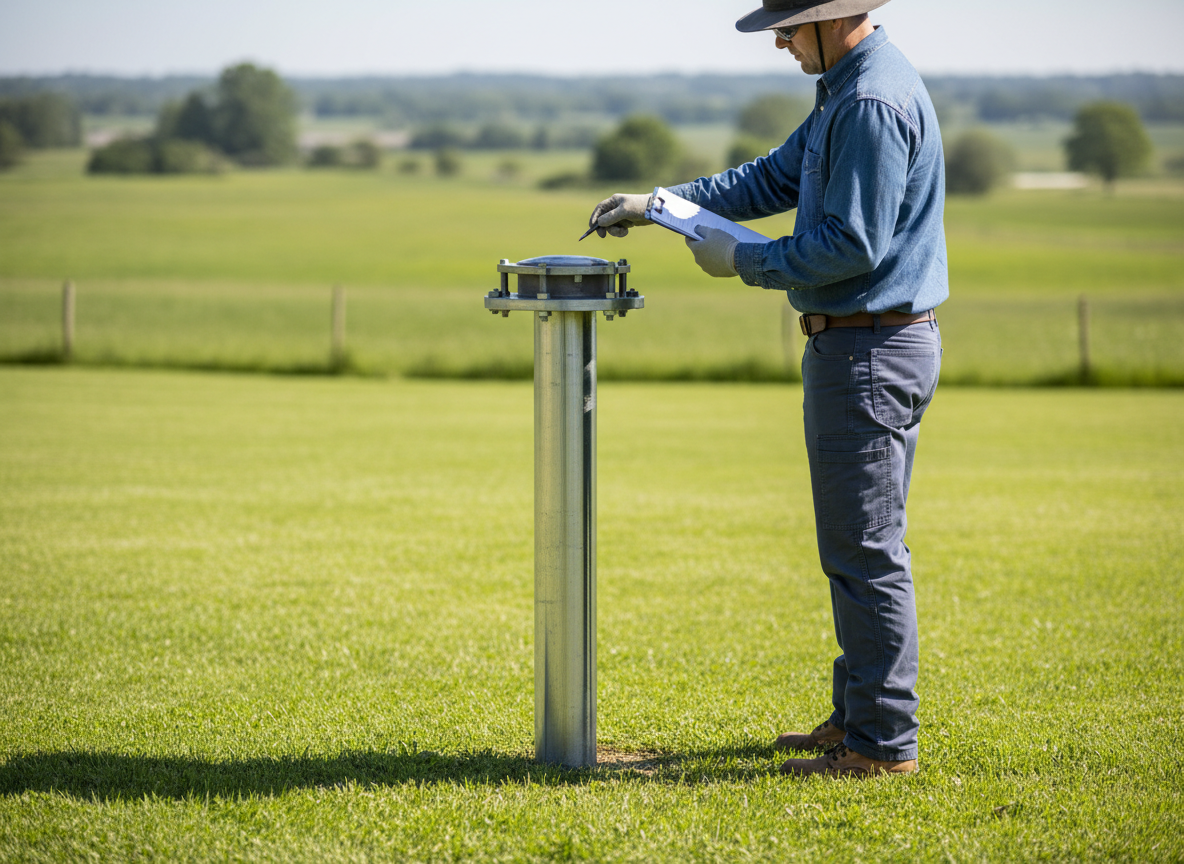
Quick answer: A standard private well inspection usually costs about $250 to $600, according to national cost guides from HomeGuide and Angi, with Angi putting the typical bill around $450. A lab water test on its own runs roughly $100 to $350, and a combined well and septic inspection about $400 to $650. Deep wells, extra lab tests, long flow tests and travel to rural properties push the price up. Prices vary by region, so get local quotes.
A well inspection is not one fixed product. A “well inspection” from one company may be a quick look at the wellhead and a bacteria sample, while another includes a multi-hour flow test and a written report. Knowing what you are paying for matters more than the headline price.
Well inspection cost at a glance
The ranges below come from national cost guides that compile contractor and customer data. Treat them as ballpark figures, not quotes.
| Service | Typical cost range | Source |
|---|---|---|
| Low-cost bacteria test through a county health department | $20 to $75 | HomeGuide |
| Basic lab water test | $130 to $200 | HomeGuide |
| Advanced lab water test | $220 to $450 | HomeGuide |
| Lab water testing (general range) | $100 to $350 | Angi, HomeAdvisor |
| Standard well inspection | $250 to $550 | HomeGuide |
| Professional well inspection | $300 to $600 (about $450 typical) | Angi |
| Comprehensive well inspection | $700 to $750 | Angi |
| Well and septic inspection together | $400 to $650 | Angi, HomeGuide |
| Home and well inspection combo | $400 to $830 | HomeGuide |
| Travel fee for rural properties | $1 to $2 per mile | HomeGuide, HomeAdvisor |
Angi reports that the full range people pay runs from about $150 to $900, depending on the well and the services ordered.
Cost by well depth
Deeper wells take more time and equipment to evaluate. Angi breaks it down like this:
| Well depth | Typical inspection cost |
|---|---|
| Up to 50 feet | $250 to $350 |
| 50 to 500 feet | $300 to $500 |
| More than 500 feet | $500 and up |
What does a flow (yield) test cost?
Flow tests are often priced separately because they take hours on site. As one real-world example, Rogue Valley Pump in southern Oregon publishes a price sheet listing a 4-hour flow test for $200, or $335 with water samples included, plus a trip charge outside its home county. That is one contractor in one market; ask local contractors for their own pricing.
What’s included in a well inspection
The National Ground Water Association (NGWA) describes a full annual checkup as including four parts:
- A flow test to check system output, with water level readings before and during pumping, plus a check of the pump motor, pressure tank and pressure switch.
- An equipment inspection to confirm the system is sanitary and meets local code.
- Water testing for coliform bacteria and nitrate, plus anything common in your area, such as iron, manganese, hardness or sulfides.
- A written report with results, recommendations and all lab data.
In practice, a good inspection covers:
| Component | What the inspector checks |
|---|---|
| Wellhead and cap | Cap is tight and vermin-proof, vent is screened, seals and gaskets are intact |
| Casing | Cracks, corrosion, height above ground, grading that drains away from the well |
| Pump | Motor performance, amperage, cycling, age |
| Pressure tank | Air charge, leaks, rust, signs of a waterlogged tank |
| Pressure switch | Cut-in and cut-out settings, worn contacts (see pressure switch settings) |
| Electrical | Conduit and wiring at the wellhead and control box |
| Flow and water level | Gallons per minute the system can deliver over time |
| Water sample | Collected and sent to a certified lab, if lab testing is included |
HomeGuide notes that a standard inspection does not tell you whether the water table will hold up over the long term. A flow test shows how the well performs on the day it is tested.
What affects the price
- Scope. A visual check plus bacteria sample costs far less than a full inspection with a multi-hour flow test.
- Number of lab tests. Adding arsenic, radon, lead, VOCs or pesticides raises the lab bill. See our well water testing guide for what to test.
- Well depth and type. Wells over 500 feet cost more to inspect, per Angi.
- Location. Rural properties often carry mileage charges of $1 to $2 per mile.
- Bundling. Ordering well and septic inspections together is often cheaper than booking them separately.
- Timing. Rush lab results or same-day sampling for a real estate deadline can add fees.
Who should do the inspection
NGWA says wells should be evaluated by a licensed or certified water well systems professional. That usually means a licensed well driller or pump installer, depending on your state’s licensing rules.
Why a general home inspector is not enough: The InterNACHI Home Inspection Standards of Practice, widely used by home inspectors, state that inspectors are not required to inspect well pumps or tanks, pressure pumps or bladder tanks, or to determine the water quality, potability or reliability of the water supply. Some home inspectors offer well add-ons, but ask exactly what they do and whether a certified lab analyzes the sample.
If you are buying a home with a well, have the well professional or lab collect the sample rather than the seller.
How often to get your well inspected
NGWA recommends annual maintenance checks to keep the well working properly, extend its service life and monitor water quality. The CDC separately recommends testing well water at least once a year for total coliform bacteria, nitrates, total dissolved solids and pH.
Test sooner, and consider a service call, when:
- The water’s taste, smell or appearance changes.
- The system has just been serviced or repaired.
- There has been flooding or land disturbance near the well (see well water after a flood).
- Someone in the home is pregnant or a baby is joining the household (CDC).
- The pump starts short cycling or pressure drops.
Questions to ask before you hire
- Are you licensed or certified for well and pump work in this state?
- What exactly is included: visual check, flow test, pump amperage, pressure tank, written report?
- How long is the flow test, and how do you measure yield?
- Which lab analyzes the water, and is it state-certified?
- Which contaminants are in the base price, and what do add-ons cost?
- Is there a travel or trip charge?
- How soon will I get the written report and lab results?
Angi notes an inspection itself usually takes 1 to 3 hours, with lab results in about 3 to 10 days. For a home purchase, build that time into your contingency period.
Frequently asked questions
How much does a well inspection cost for a home purchase?
Most buyers pay in the range of about $250 to $600 for the well inspection, plus lab testing if it is not included. Many also bundle a septic inspection, which national guides put at about $400 to $650 for both together. Prices vary by region.
Is a well inspection worth it?
Usually, yes. Angi lists well pump replacement at roughly $975 to $2,800 and casing replacement at roughly $375 to $2,500, so catching problems before you buy, or before they fail, can save far more than the inspection costs.
Does a home inspection include the well?
Generally not in any detail. Common home inspection standards exclude well pumps, pressure tanks and water quality. Order a separate well inspection and certified lab test.
How often should a well be inspected?
NGWA recommends an annual checkup by a licensed or certified professional, and the CDC recommends testing the water at least once a year.
Can I test my well water myself instead?
You can collect a sample yourself for a certified lab, and many county health departments offer low-cost bacteria tests. That covers water quality but not the pump, pressure tank, casing or flow, which need a professional.
Related guides
- Buying a home with a well: inspection and testing checklist
- Well water testing: what to test for and how often
- Pressure tank air pressure: how to check and set it
Sources
- Angi – Cost of a Well Inspection
- HomeGuide – How Much Does a Well Inspection Cost?
- National Ground Water Association (wellowner.org) – Annual Water Well Inspection
- CDC – Guidelines for Testing Well Water
Costs in this guide are national estimates from published cost guides and one contractor’s price sheet; actual prices vary by region and provider. Get written quotes from licensed local professionals.
Leave a Reply