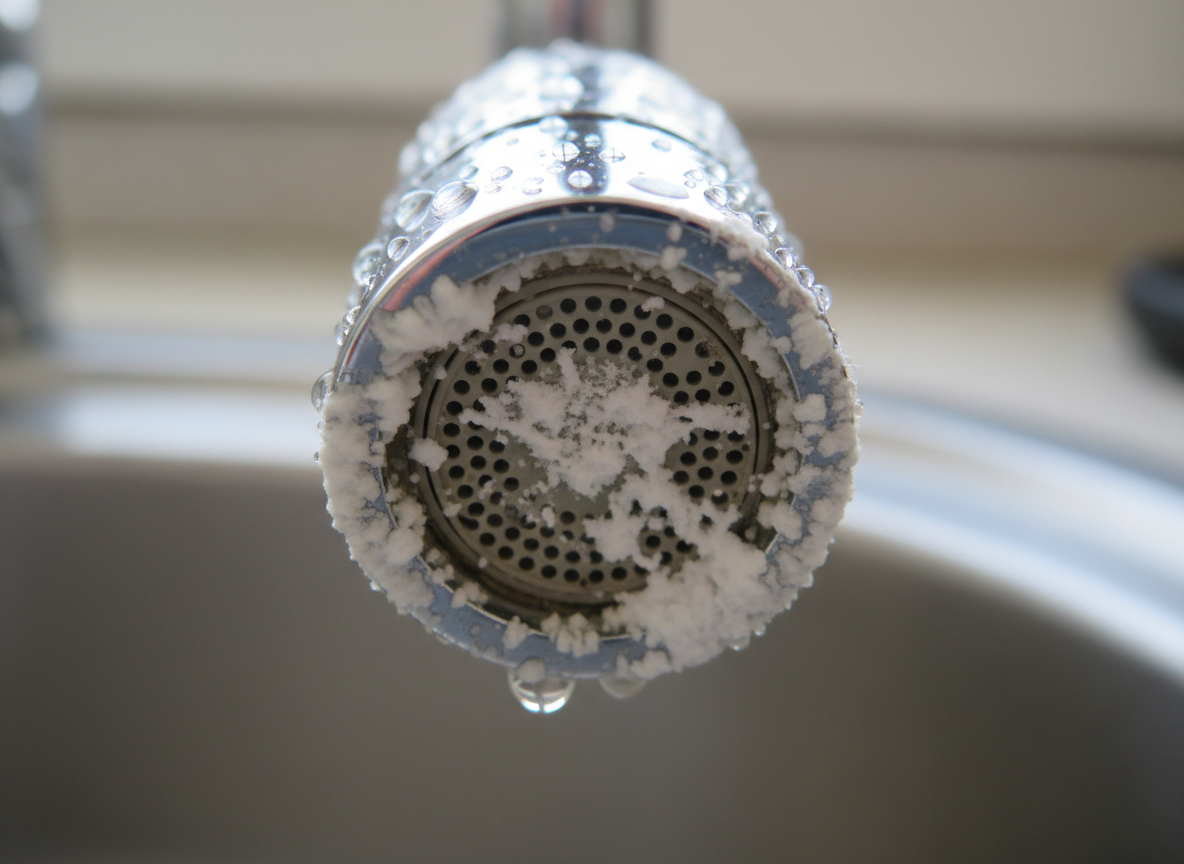
Quick answer: Hard well water contains high levels of dissolved calcium and magnesium, picked up as groundwater moves through rock such as limestone. The USGS calls water hard at 121 to 180 mg/L and very hard above 180 mg/L (about 10.5 grains per gallon). It is not considered a health risk, but it causes scale, spots and soap scum. An ion-exchange water softener is the standard fix; reverse osmosis can treat drinking water at one tap.
You scrub the shower door and a week later the white film is back. The kettle crunches, the dishwasher leaves spots, and the shampoo never quite lathers. By the end of this guide you’ll know how hard your water really is, whether it matters for your health, and which treatment fits your well.
What “hard water” actually means
Hardness is the amount of dissolved calcium and magnesium in water, according to the U.S. Geological Survey (USGS). Labs usually report it as mg/L as calcium carbonate, even though it’s the combined total of both minerals. Softener dealers often use grains per gallon (gpg) instead.
The water hardness scale
Here is the USGS classification, with the gpg equivalents:
| Hardness (mg/L as calcium carbonate) | Approx. grains per gallon | USGS classification |
|---|---|---|
| 0 to 60 | 0 to 3.5 | Soft |
| 61 to 120 | 3.5 to 7 | Moderately hard |
| 121 to 180 | 7 to 10.5 | Hard |
| Over 180 | Over 10.5 | Very hard |
Agencies don’t all draw the lines in the same place. Penn State Extension and North Dakota State University add a “slightly hard” band (17 to 60 mg/L) and call water under 17 mg/L soft. The Vermont Department of Health uses a looser scale, calling water hard only at 151 to 300 mg/L. The number on your report matters more than the label.
When is it worth treating? NDSU Extension says most people start noticing problems at about 6 to 7 gpg, and the Minnesota Department of Health suggests considering a softener above 7 gpg (120 mg/L).
Converting gpg to mg/L (and back)
One grain is about 64.8 milligrams and one U.S. gallon is about 3.785 liters, so:
- 1 gpg = about 17.1 mg/L (many extension guides round this to 17)
- gpg to mg/L: multiply by 17.1
- mg/L to gpg: divide by 17.1
Example: a lab result of 250 mg/L ÷ 17.1 = about 14.6 gpg, which is very hard. ppm and mg/L are the same thing for water. This is the same conversion we use in our softener sizing guide.
Why hard well water is so common
As rain and snowmelt soak through the soil, they absorb carbon dioxide and become slightly acidic. On the way down to the aquifer, that water slowly dissolves minerals from the rock around it, which is how hard well water forms.
- The National Ground Water Association (NGWA) says hardness may be the most common problem with groundwater, and that calcium and magnesium come from contact with rocks such as limestone and gypsum.
- The USGS found hard water was prevalent in the east-central and western United States, reflecting where carbonate aquifers (limestone and dolomite) and mineral-rich aquifers are found.
- A county health department in Minnesota, for example, traces its residents’ hard water to aquifers made of limestone and dolomite.
A private well delivers whatever the aquifer holds, with no utility treating it first. Our well water vs city water guide explains other differences.
Because hardness depends on local geology, two wells in the same county can test very differently. Test your own.
Is hard well water safe to drink?
Yes, as far as current evidence shows. The USGS states that hardness is not a health concern, but it can be a nuisance. Penn State Extension notes that calcium and magnesium have no adverse health effects and are in fact essential nutrients. The North Carolina Department of Health and Human Services points out that the EPA has no drinking water standard for hardness.
The USGS also cites the World Health Organization, which says drinking water may contribute calcium and magnesium to the diet. The Vermont Department of Health estimates that an 8-ounce glass of moderately hard water holds about 50 to 75 mg of calcium.
What about dry skin and eczema? The North Carolina DHHS says hard water may cause dry, itchy skin and scalp. For eczema the research is mixed:
- A King’s College London study of about 1,300 UK infants linked living in a hard water area with up to an 87% higher risk of eczema at three months. The authors said it’s not yet clear whether hardness itself is the cause.
- A University of Nottingham trial of 336 children with eczema found that installing a water softener for three months brought no additional relief when eczema was measured objectively.
If skin problems are your main reason for softening, talk to a doctor as well.
6 signs of hard water you can spot at home
According to the USGS, Penn State Extension and the Vermont Department of Health, look for:
- White, crusty scale on faucets, showerheads, kettles and pots
- Spots and cloudy film on dishes and glassware
- Soap scum in tubs and sinks, and soap or shampoo that won’t lather well
- Dingy or stiff laundry, because more detergent is needed
- Scale in the water heater, which shortens its useful life
- Reduced flow from mineral buildup in pipes and fixtures
White residue can also come from other minerals or high total dissolved solids, so confirm with a test before buying equipment.
How to find your exact hardness number
- Quick check: a hardness test strip from a hardware store gives a rough number in a minute. See our home testing guide.
- Lab test: UNL Extension notes that lab results are more reliable than strips. Penn State Extension recommends an independent lab rather than a free test from a company selling softeners, to avoid being oversold.
- Test iron and manganese at the same time. They change which treatment works and how big a softener you need.
- Retest periodically. The Vermont Department of Health recommends testing hardness as part of an inorganic chemical test every five years.
Pro tip: Write down your result in both mg/L and gpg. Softeners are set in gpg, and your lab may only report mg/L.
How to soften well water: comparing your options
| Option | Does it remove hardness? | Best for | Limits |
|---|---|---|---|
| Ion-exchange (salt) softener | Yes, whole house | Most hard wells, including those with small amounts of dissolved iron | Needs salt, a drain and power; adds sodium |
| Salt-free conditioner (TAC) | No, it reduces scale but hardness stays the same | Moderate hardness with no iron, manganese or sediment | Fouled by iron and manganese; won’t improve lather |
| Reverse osmosis (RO) | Yes, at one tap | Drinking and cooking water | Not whole house; hardness can scale the membrane |
| Magnetic devices | No | Not recommended | NDSU Extension reports research found no change in the water’s properties |
Ion-exchange softener: the standard fix
A softener swaps calcium and magnesium for sodium (or potassium) on resin beads. NDSU Extension says it adds about 8 mg/L of sodium for every grain of hardness removed. People on sodium-restricted diets can use potassium chloride or keep one unsoftened tap for drinking. Size it with our softener sizing guide, and if it ever stops keeping up, see water softener not working.
Mistake to avoid: Don’t put a softener in front of a well with high iron and expect it to cope. Iron that’s exposed to air fouls the resin. Deal with iron in well water first.
Salt-free conditioners: know the limits
Template-assisted crystallization (TAC) units change the minerals so they’re less likely to form scale, but they don’t lower your hardness reading. They’re a poor fit for many wells because iron, manganese and sediment foul the media. Our salt-free vs salt-based comparison covers the details.
Reverse osmosis for drinking water
An under-sink reverse osmosis system removes most minerals from drinking water. On very hard water it usually works best after a softener, because hardness can scale the membrane.
Frequently asked questions
Is hard well water bad for you?
No. The USGS says hardness is not a health concern, and calcium and magnesium are essential nutrients. The problems are mostly scale, spots and extra soap use.
How hard is too hard for well water?
There’s no health limit. Most people notice problems at about 6 to 7 gpg, and the Minnesota Department of Health suggests considering a softener above 7 gpg (120 mg/L).
Can I soften well water without salt?
You can reduce scale with a certified salt-free conditioner, but it won’t truly soften the water. Potassium chloride in a standard softener avoids sodium but still uses a brine tank.
Does boiling hard water remove hardness?
Not in any practical way. The USGS notes that heating hard water makes calcium carbonate deposits form, which is the scale in your kettle and water heater. Boiling doesn’t soften the water in your pipes.
Related guides
- What size water softener do I need?
- Salt-free vs salt-based water softener
- Water softener not working? 10 checks before you call a pro
Sources
- USGS – Hardness of Water
- National Ground Water Association (wellowner.org) – Groundwater Quality Basics
- Vermont Department of Health – Hardness in Drinking Water
- Penn State Extension – Water Softening
This guide is for general information. Have your well tested by a state-certified lab before buying treatment equipment, and ask your doctor about sodium if you’re on a restricted diet.
Leave a Reply